Iran: Where Does This Go From Here
Event Details
April 16, 2026
Noon -5 PM ET
Dirksen Senate Office Building
Washington, D.C.
For more information about this event, please email nathan.peterson@pepperdine.edu or call 530.510.1584.
|
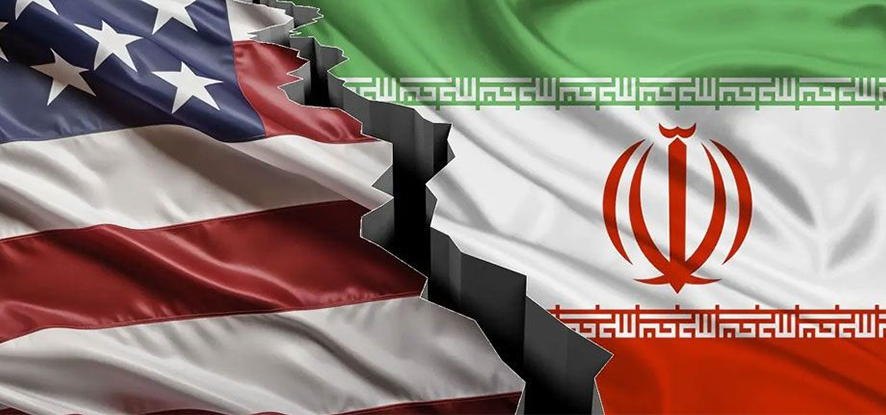
The Pepperdine School of Public Policy is pleased to convene a forum of policymakers, scholars, and regional experts to examine the escalating tensions between the United States, Israel, and Iran. It focuses on how recent military strikes have reshaped internal dynamics within Iran, influenced global U.S. power, and altered Middle Eastern geopolitical and economic conditions, particularly around oil and the Strait of Hormuz. Through panels and discussions, participants will analyze the origins of the conflict, assess U.S. strategy and objectives, and consider whether regime change is necessary to achieve long-term goals. The conference also looks ahead to post-conflict scenarios, including potential transitions within Iran and the broader implications for regional stability and U.S. influence. |
Schedule
11:45 am - 12:00 pm: Arrival and Sign-in
12:00 - 1:00 pm: Lunch Keynote with Kiron Skinner
1:10 - 1:50 pm: One-on-One Discussion - U.S. Influence in the world post-conflict
- Speaker - Kiron Skinner, Taube Family Chair, Pepperdine School of Public Policy
- Speaker - Johnnie Moore, PhD, Vice Chancellor and Managing Director of Middle East Studies, Pepperdine University, Washington, D.C.
2:00 - 2:50 pm: Panel 1: Changing Power Dynamics in the Middle East
- Moderator - Charlie Cohen, Master of Middle East Policy Studies candidate, Pepperdine University
- Speaker - Patrick Clawson, Morningstar Senior Fellow and Research Counselor, The Washington Institute
- Speaker - Farzin Nadimi, Senior Fellow, The Washington Institute
- Speaker - Aykan Erdemir, Senior Director of Global Research and Diplomatic Affairs, Anti-Defamation League
3:00 - 3:50 pm: PANEL 2: The Day After - Where do we go from here?
- Moderator - Gefen Kabik, Master of Middle East Policy Studies candidate, Pepperdine University
- Speaker - Joel Rayburn, Senior Fellow, Hudson Institute’s Center for Peace and Security in the Middle East
- Speaker - Rich Goldberg, Senior Advisor, Foundation for Defense of Democracies (FDD) and a former U.S. national security official
- Speaker - Bijan Kian, President for the Institute for Voices of Liberty
3:50 - 4:00 pm: Closing Remarks
4:00 - 5:00 pm: Closing Reception and Informal Discussions
Keynote Speaker
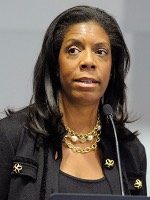 Dr. Kiron Skinner is an expert in international relations, U.S. foreign policy, and
political strategy, and serves as the Taube Family Chair at the Pepperdine School
of Public Policy. She is the founding director of both the Grand Strategy Program
and the Institute for Diplomacy, Security, and Innovation. She is also a research
fellow at the Hoover Institution and senior advisor to the Heritage Foundation. Dr.
Skinner previously served as Director of Policy Planning at the U.S. Department of
State (2018–2019), where she advanced strategic dialogues, strengthened interagency
coordination, and contributed to major policy initiatives on global competition and
transatlantic relations. Her extensive government service includes advisory roles
with the Department of Defense, National Security Education Board, and National Academies.
Dr. Kiron Skinner is an expert in international relations, U.S. foreign policy, and
political strategy, and serves as the Taube Family Chair at the Pepperdine School
of Public Policy. She is the founding director of both the Grand Strategy Program
and the Institute for Diplomacy, Security, and Innovation. She is also a research
fellow at the Hoover Institution and senior advisor to the Heritage Foundation. Dr.
Skinner previously served as Director of Policy Planning at the U.S. Department of
State (2018–2019), where she advanced strategic dialogues, strengthened interagency
coordination, and contributed to major policy initiatives on global competition and
transatlantic relations. Her extensive government service includes advisory roles
with the Department of Defense, National Security Education Board, and National Academies.
Her work spans cybersecurity, emerging technologies, and national security strategy. She is also a best-selling author and leading scholar on President Ronald Reagan, with publications featured in major outlets including The New York Times, The Wall Street Journal, and Foreign Policy.
Speakers and Moderators:
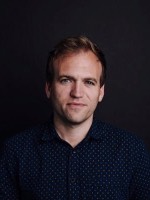 Reverend Johnnie Moore, PhD, is Vice Chancellor and Managing Director of Middle East
Studies at Pepperdine University in Washington, D.C. A leading voice at the intersection
of faith and foreign policy, his work focuses on the Middle East, religious freedom,
and the role of faith in global affairs.
Reverend Johnnie Moore, PhD, is Vice Chancellor and Managing Director of Middle East
Studies at Pepperdine University in Washington, D.C. A leading voice at the intersection
of faith and foreign policy, his work focuses on the Middle East, religious freedom,
and the role of faith in global affairs.
Dr. Moore has served twice on the U.S. Commission for International Religious Freedom and has played a meaningful role in major diplomatic efforts, including the Abraham Accords. He has led high-level humanitarian initiatives, including efforts delivering nearly 200 million meals to Gaza, and has engaged extensively with heads of state and regional leaders across more than 100 countries.
A globally recognized advocate for religious freedom and human rights, his work has contributed to international declarations, interfaith cooperation initiatives, and the release of persecuted individuals. He is a frequent speaker at leading institutions worldwide and a prolific author and commentator on religion, policy, and global affairs.
 Charlie Cohen is in his first year in the Pepperdine/Washington Institute Master of
Middle East Policy Studies program. Cohen is from Omaha, Nebraska, where he lived
before getting his bachelor's degree from the Raphael Recanati International School
at Reichman University in Herzliya, Israel. From July 2024 to August 2025 Charlie
worked at the Brody Jewish Center Hillel at the University of Virginia. He is set
to intern this summer at United Against a Nuclear Iran.
Charlie Cohen is in his first year in the Pepperdine/Washington Institute Master of
Middle East Policy Studies program. Cohen is from Omaha, Nebraska, where he lived
before getting his bachelor's degree from the Raphael Recanati International School
at Reichman University in Herzliya, Israel. From July 2024 to August 2025 Charlie
worked at the Brody Jewish Center Hillel at the University of Virginia. He is set
to intern this summer at United Against a Nuclear Iran.
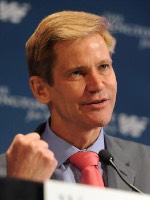 Dr. Patrick Clawson is the Morningstar Senior Fellow and Research Counselor at The
Washington Institute, where he directs the Viterbi Program on Iran and U.S. Policy.
Widely consulted as an analyst and media commentator, he has authored more than 150
articles about the Middle East and international economics and is the author and editor
of eighteen books and studies on Iran. After joining the Institute in 1997, Dr. Clawson
served as Director of Research until February 2024. Dr. Clawson has also testified
before congressional committees more than twenty times and has served as an expert
witness in more than thirty federal cases against Iran.
Dr. Patrick Clawson is the Morningstar Senior Fellow and Research Counselor at The
Washington Institute, where he directs the Viterbi Program on Iran and U.S. Policy.
Widely consulted as an analyst and media commentator, he has authored more than 150
articles about the Middle East and international economics and is the author and editor
of eighteen books and studies on Iran. After joining the Institute in 1997, Dr. Clawson
served as Director of Research until February 2024. Dr. Clawson has also testified
before congressional committees more than twenty times and has served as an expert
witness in more than thirty federal cases against Iran.
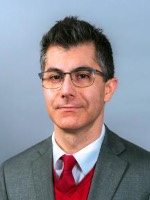 Dr. Farzin Nadimi, a Senior Fellow with The Washington Institute, is a Washington-based
analyst specializing in the security and defense affairs of Iran and the Persian Gulf
region. He has written previously for the Institute regarding Tehran's asymmetric
naval warfare strategy.
Dr. Farzin Nadimi, a Senior Fellow with The Washington Institute, is a Washington-based
analyst specializing in the security and defense affairs of Iran and the Persian Gulf
region. He has written previously for the Institute regarding Tehran's asymmetric
naval warfare strategy.
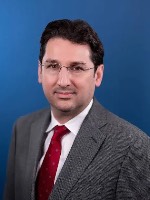 Dr. Erdemir is Senior Director of Global Research and Diplomatic Affairs at the Anti-Defamation
League and a former member of the Turkish Parliament (2011–2015), where he served
on the EU–Turkey Joint Parliamentary Committee and EU Harmonization Committee. He
is a founding member of the International Panel of Parliamentarians for Freedom of
Religion or Belief and a signatory to the Oslo Charter and the London Declaration
on Combating Antisemitism. He previously served as Senior Director of the Turkey Program
at the Foundation for Defense of Democracies and has received the Stefanus Prize for
Religious Freedom and the First Freedom Award. He was also named by Washingtonian
magazine as one of the “500 Most Influential People Shaping Policy” in Washington,
DC.
Dr. Erdemir is Senior Director of Global Research and Diplomatic Affairs at the Anti-Defamation
League and a former member of the Turkish Parliament (2011–2015), where he served
on the EU–Turkey Joint Parliamentary Committee and EU Harmonization Committee. He
is a founding member of the International Panel of Parliamentarians for Freedom of
Religion or Belief and a signatory to the Oslo Charter and the London Declaration
on Combating Antisemitism. He previously served as Senior Director of the Turkey Program
at the Foundation for Defense of Democracies and has received the Stefanus Prize for
Religious Freedom and the First Freedom Award. He was also named by Washingtonian
magazine as one of the “500 Most Influential People Shaping Policy” in Washington,
DC.
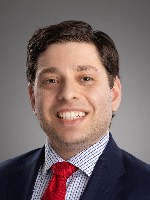 Gefen Kabik is a senior policy analyst at the American Action Network/Congressional
Leadership Fund, and has completed his first year of graduate school at Pepperdine
University's Master of Middle East Policy Studies program. Kabik previously worked
on legislative affairs at AIPAC, including on numerous pieces of Iran legislation.
He also served in the previous administration as a congressional liaison at the United
States Agency for International Development, where his work focused on Southern Africa
and Europe and Eurasia. He is a graduate of the University of Maryland where he studied
history and government and politics.
Gefen Kabik is a senior policy analyst at the American Action Network/Congressional
Leadership Fund, and has completed his first year of graduate school at Pepperdine
University's Master of Middle East Policy Studies program. Kabik previously worked
on legislative affairs at AIPAC, including on numerous pieces of Iran legislation.
He also served in the previous administration as a congressional liaison at the United
States Agency for International Development, where his work focused on Southern Africa
and Europe and Eurasia. He is a graduate of the University of Maryland where he studied
history and government and politics.
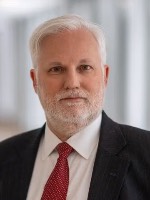 Joel Rayburn is a senior fellow in Hudson Institute’s Center for Peace and Security
in the Middle East.
Joel Rayburn is a senior fellow in Hudson Institute’s Center for Peace and Security
in the Middle East.
A historian of the Middle East and a former diplomat and military officer, Mr. Rayburn served as special advisor for Middle East affairs in the office of Senator Bill Hagerty (R-TN) from January to July 2021.
From July 2018 to January 2021, Mr. Rayburn was the United States special envoy for Syria. In that post, he oversaw US diplomatic activities concerning Syria, supervised more than 100 diplomats and civil servants across the Middle East and Europe, and, from November 2020 to January 2021, served as US chief of mission for Syria. Until November 2020, he was also deputy assistant secretary for Levant affairs, responsible for implementing US policy concerning Syria, Jordan, and Lebanon.
 Mr. Goldberg is a Senior Advisor at the Foundation for Defense of Democracies (FDD)
and a former U.S. national security official with extensive experience in Iran policy,
sanctions, and countering weapons of mass destruction. He previously served on the
White House National Security Council as Director for Countering Iranian WMD and played
a key role in shaping the “maximum pressure” campaign against Iran.
Mr. Goldberg is a Senior Advisor at the Foundation for Defense of Democracies (FDD)
and a former U.S. national security official with extensive experience in Iran policy,
sanctions, and countering weapons of mass destruction. He previously served on the
White House National Security Council as Director for Countering Iranian WMD and played
a key role in shaping the “maximum pressure” campaign against Iran.
Earlier in his career, Mr. Goldberg was a leading architect of U.S. sanctions on Iran in the Senate, helping advance measures targeting the Central Bank of Iran, the SWIFT financial system, and key sectors of the Iranian economy. He also contributed to U.S.-Israel missile defense cooperation, supporting programs such as Iron Dome and Arrow-3.
Mr. Goldberg has held senior roles across government, including positions at the Department of the Interior, the White House National Energy Dominance Council, and as Chief of Staff to the governor of Illinois. He also served as an intelligence officer in the U.S. Navy Reserve, with assignments at the Pentagon, U.S. European Command, and in Afghanistan.
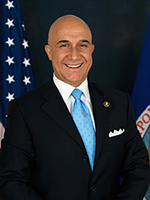 The Honorable Bijan Kian is an accomplished global business leader and public servant
with over 30 years of experience across governance, economic development, and international
affairs. Twice confirmed by the U.S. Senate, Mr. Kian has served in senior roles across
three U.S. presidential administrations and held key positions at both the federal
and state levels, including the Office of the Director of National Intelligence, Chairman
of the Board of private corporations, and as a Board Member and Chairman of the Audit
Committee for a U.S. Government agency. Mr. Kian has served as a Senior Fellow in
Global Public Policy at the U.S. Naval Postgraduate School and as a lecturer at leading
institutions, including Georgetown University and the National War College. Mr. Kian
is a recipient of the Ellis Island Medal of Honor (2009) and a Fellow of the Royal
Society of Arts in the United Kingdom. He currently serves as the President of the
Institute for Voices of Liberty, and frequently appears on major broadcasting channels,
including BBC, Epoch Times, and Iran International, as a renowned expert on Iran.
The Honorable Bijan Kian is an accomplished global business leader and public servant
with over 30 years of experience across governance, economic development, and international
affairs. Twice confirmed by the U.S. Senate, Mr. Kian has served in senior roles across
three U.S. presidential administrations and held key positions at both the federal
and state levels, including the Office of the Director of National Intelligence, Chairman
of the Board of private corporations, and as a Board Member and Chairman of the Audit
Committee for a U.S. Government agency. Mr. Kian has served as a Senior Fellow in
Global Public Policy at the U.S. Naval Postgraduate School and as a lecturer at leading
institutions, including Georgetown University and the National War College. Mr. Kian
is a recipient of the Ellis Island Medal of Honor (2009) and a Fellow of the Royal
Society of Arts in the United Kingdom. He currently serves as the President of the
Institute for Voices of Liberty, and frequently appears on major broadcasting channels,
including BBC, Epoch Times, and Iran International, as a renowned expert on Iran.