SPP Partners with Stanford, Hoover Institution on Future of AI Policy in Washington, DC
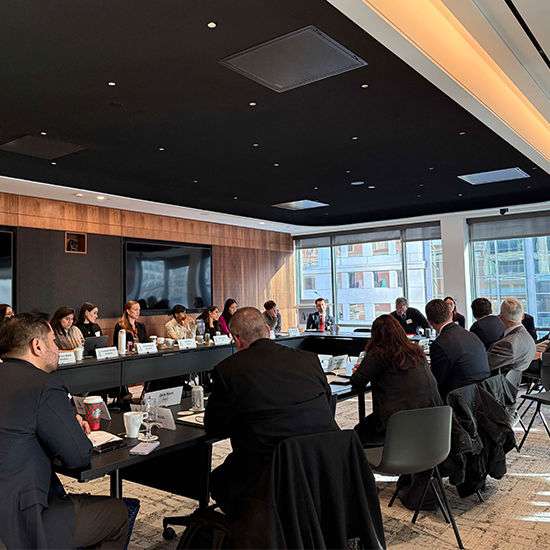
The School of Public Policy joined the Deliberative Democracy Lab at Stanford University and the Hoover Institution’s Renewing American Institutions initiative to host a daylong seminar titled “From People to Policy Makers: A Symposium on Perspectives on AI.” The event was held at Hoover’s Washington, DC, facility on December 9, 2025.
Featuring tech leaders, congressional policy makers, activists, and academic researchers, the agenda began with a discussion of several public surveys on American and global attitudes toward AI and possible regulatory alternatives. This overview of AI public perception was followed by a presentation on the impact of AI on government services by Jennifer Pahlka, founder and former executive director of Code for America, and current head of Recoding America.
Following lunch, Congressmen Jay Obernolte (R-CA) and Ro Khanna (D-CA) were interviewed about their respective positions on AI policy with a particular focus on whether AI should be regulated at the state or national levels. Representatives from several AI-related firms like Meta, Cohere, and Amazon Web Services participated in the lively roundtable discussions.
The afternoon conversation ended with a panel organized and moderated by SPP dean Pete Peterson, which included Hoover fellow and former congressman, Dr. Dan Lipinski, along with panelists from Meta, the Abundance Institute, and the Center for Democracy and Democracy. The group agreed that only considering AI policy through the lens of national security can hinder deliberative discussions like this one.
“This Symposium was a unique combination of review of public attitudes and policy maker deliberation on AI,” described Alice Siu from Stanford’s Deliberative Democracy Lab. “We've worked with the School of Public Policy in the past on these kinds of public engagement efforts, so they were a logical partner for this roundtable on AI policy."
Peterson commented on the event, adding, “We often say that ‘there’s a public in public policy.’ This was a great opportunity to bring the public’s voice into a high-level policy discussion about a complex and timely subject area.”
SUBSCRIBE TO THE WAVELENGTH
Pepperdine Newsroom's official newsletter for campus updates and top news.
Subscribe