2027 Roots of American Order Faculty Seminar
“The seminar was transformative for me because I had never had the opportunity to engage with most of the readings since I grew up abroad. The readings were marvelously put together and had clear connections to one another, creating an amazing journey from the medieval ages to today. Despite being a foreigner, I now feel prepared to teach these topics, and I know which readings to assign and how to discuss them.”
Alessandro Del Ponte, History
Chapman University, California
Like few public policy programs in America, Pepperdine’s School of Public Policy began as a response to the state of the public policy discipline as opposed to some reorganization of existing social science departments. The founding argument was that American policy makers and public leaders needed to understand not only the “how” of public policy (political science and economics), but the “why” of public policy (history and political philosophy).
The current national debates about whether America was founded in 1776 or 1619 are more than quibbles about dates; they are fundamental disagreements over both national identity and the principles that undergird free societies, and they are influencing a variety of current policy debates - from America's role in the world to AI policy.
To this consequential argument, the late historian Russell Kirk raised a provocative question: What if America’s origins were in neither 1776 nor 1619, and were not even in America, but in Old Testament Israel, Greece in the 7th Century BC, Rome in the 3rd Century AD, and England in the Middle Ages? Both the Declaration of Independence and our Constitution did not just spring from contemporary thinking, but are grounded in centuries’ old conceptions of human nature, citizenship, and the role of government.
This question was much on Kirk’s mind as he took up residence on Pepperdine University’s Malibu campus in 1973 to pen what would become his magnum opus, The Roots of American Order. This book title and broader argument of understanding America’s founding as a realization of debates and themes dating back millennia, serve as the foundation of one of Pepperdine University’s School of Public Policy’s core classes: “Roots of American Order: What is Public Policy?.” For over two decades, this course has prepared future policy makers to consider America’s exceptional founding, and why this broader conception of the nation can be applied to today’s policy debates.
About the Program
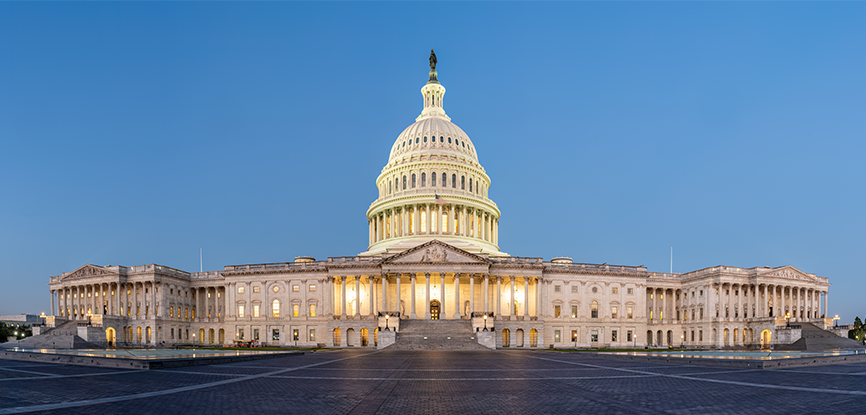
This three-day summer seminar is hosted on our Washington, DC campus for 20-25 junior
faculty, teaching faculty, or full-time lecturers (five years of teaching experience
or less, non-tenured). The seminar will feature a series of Socratic discussion-based
sessions (colloquy style) to delve deeply into the primary documents through textual
analysis, moderated by seasoned faculty. 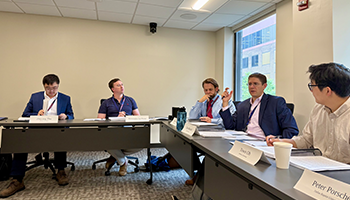 Faculty participants will read and discuss primary documents about the American Founding,
the Crisis of the House Divided, the Progressive era, and the rise of the administrative
state through the distinctive lens and in the spirit of the “Roots of American Order”
course. By focusing on the major contributing factors to the nation’s founding, the
seminar will include discussion on how those factors continue to influence current
discussions on public policy.
Faculty participants will read and discuss primary documents about the American Founding,
the Crisis of the House Divided, the Progressive era, and the rise of the administrative
state through the distinctive lens and in the spirit of the “Roots of American Order”
course. By focusing on the major contributing factors to the nation’s founding, the
seminar will include discussion on how those factors continue to influence current
discussions on public policy.
Civic knowledge of America’s Founding, such as principles of self-government, consent, and liberty, is needed to confront the grave challenges our country faces today. Our objective is to provide focused preparation for how to teach about America’s Founding to the modern day administrative state utilizing primary texts, but also sharing a new way to teach through the lens of applied history, with history and public policy conjoining in engaging and thought-provoking ways. We seek to equip faculty participants through a content pedagogical transfer of the material so they can teach a variation of the “Roots” course on their own campuses. Colloquy discussions will include techniques to integrate documents into current and future teaching.
Junior faculty from the humanities, history, political science, economics, philosophy, public policy, and civics or those who teach freshmen seminar courses with open subject topics are especially encouraged to apply.
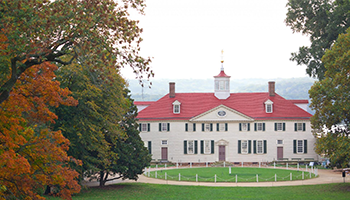
This program includes an excursion to George Washington’s home, Mount Vernon, and dinner at the Mount Vernon Inn.
Program Quick Facts:
Eligibility:
Junior Faculty, Teaching Faculty, or Full-time Lecturers (five years of teaching experience or less, non-tenured)
Dates:
March 17-20, 2027
Location:
Pepperdine University, Washington, DC Campus
Funding:
This is a fully-funded program. Participants will receive travel to and from Washington, DC, hotel accommodations, and all meals.
Application Dates:
Application Open: Monday, August 31, 2026
Application Deadline: Monday, November 2, 2026
For questions, please contact roots.seminar@pepperdine.edu.
Applications Now Open
Required application materials:
- CV (pdf.)
- Essay (pdf.)
Based on the ethos of your university or college, how would this seminar benefit both the students and the institution? Do you currently utilize primary texts in your teaching? Why or why not? How do you anticipate utilizing or integrating this material into your courses? What is the value of studying these ideas either in your research or teaching? (1000-words or less)
For questions, please contact roots.seminar@pepperdine.edu.
Faculty Leadership: Abbylin Sellers
 Abbylin H. Sellers is the Edward L. Gaylord Professor of Public Policy at Pepperdine
University in the School of Public Policy. She teaches welfare policy and the core
curriculum courses on great books and foundations of American constitutionalism, which
lay a foundation for effective public policy solutions being guided by moral and ethical
principles.
Abbylin H. Sellers is the Edward L. Gaylord Professor of Public Policy at Pepperdine
University in the School of Public Policy. She teaches welfare policy and the core
curriculum courses on great books and foundations of American constitutionalism, which
lay a foundation for effective public policy solutions being guided by moral and ethical
principles.
Before joining Pepperdine University, she was a professor of American Politics at Azusa Pacific University where she taught courses on the constitutional presidency, Congress and the legislative process, women and the political process, civil discourse in an age of political polarization, and served as a faculty fellow in the Honors College teaching American democracy for the Honors College. Sellers was awarded the university’s highest honor for teaching, the Teaching Excellence award in 2017.
Her research focuses on welfare policy, political behavior, and immigrant entrepreneurship, with her work appearing in Political Psychology; Politics, Groups, and Identities; Presidential Studies Quarterly; and the Journal of Military History. Her co-authored work has been recognized by the American Political Science Association for “Best Paper” for the Representation and Electoral Systems section in 2018. Sellers was awarded as a 2022-2023 Fulbright Scholar to teach American constitutionalism and the constitutional presidency in Japan at Yokohama National University and Hosei University (Tokyo). She annually serves on the summer faculty for the James Madison Foundation’s Summer Institute in Washington, DC.
Sellers earned her B.A. from Westmont College, M.A. in public policy from Regent University, and Ph.D. in political science from Claremont Graduate University.
What Faculty Say About Their Experience
“I thoroughly enjoyed the Roots Summer Seminar for faculty. Pepperdine struck the right balance between breadth and depth. I am confident my students will benefit from the new layers that Pepperdine's expert instructors and other participants were able to uncover for me. I particularly benefited from how the seminar helped me see how I could better present primary sources and sometimes thorny issues to young college students.”
Brandon Dabling, Political Science
Snow College, Utah
“The Pepperdine Seminar on the Roots of American Order will prove an invaluable experience for me as I seek to communicate the nature, importance, and origins of our nation's founding ideas in the classroom. The most fruitful aspect of the colloquia was how the interdisciplinary perspectives of the leaders and participants brought their various fields of expertise to bear on the texts. I now have a network of colleagues from across the country working to instill an appreciation for the Founders' vision in the next generation of students.”
John Rhett Forman, Philosophy
Tarleton State University, Texas
“I deeply appreciated the opportunity to participate in this seminar for a number of reasons. First, it was very refreshing to engage in really deep discussions with like-minded faculty who shared key a priori assumptions about human nature, morality, concepts of truth, etc. We obviously didn't agree on everything, but being generally aligned on some of these bigger questions allowed us the freedom to really drill down on the content of the primary sources in a substantive way. The venue and general pacing of the seminar was great as well because it allowed us time to explore DC with recent discussions on America's political development fresh in our minds. For me, walking and driving around DC felt like doing philosophical archaeology as one could see the stamp of different ideas that have shaped our politics and culture impacting the architecture and design of the city. This was particularly apparent in the Mount Vernon visit where I was struck by Washington's attention to tending his land and improving it, but working with its natural capacities. In reading several of Washington's pieces for the seminar, it stood out to me that Washington's practicality (indeed many of the Founders') was rooted in a deep awareness of agriculture and not in some abstract notion of pragmatism.”
Tim Milosch, Political Science
Biola University, California
“The colloquy discussions were undoubtedly the highlight for me. Working directly with primary documents, rather than simply discussing secondary interpretations, reminded me of the power of original texts in helping students engage with foundational ideas. As an economist who will teach political economy the coming semester, I left with many new ideas for expanding my courses and incorporating more primary sources into classroom discussions. I believe this approach will encourage students to think more critically about the historical origins and continuing relevance of political and economic institutions. Another aspect I greatly appreciated was the opportunity to meet junior faculty from colleges and universities across the country. The conversations were intellectually stimulating, and it was encouraging to exchange teaching ideas with colleagues from a wide range of disciplines. I expect many of these professional connections will continue well beyond the seminar. I encourage other junior and non-tenured faculty to participate in future Roots of American Order seminar. The program provides an outstanding combination of rigorous academic discussion, practical teaching inspiration, and meaningful professional networking.”
Zhiyang Zhu, Economics
DePauw University, Indiana