2027 Roots of American Order Summer Certificate Seminar

"The experience of learning from other students around the country was life-changing. It was an amazing opportunity to get to build true civic friendships with students with different political views and backgrounds from my own. By the end of the week, I left with a far greater appreciation for the various perspectives held by students from all parts of the country. Despite significant differences, I am fortunate to call many of these students my genuine friends."
Connor Doyle
Assumption University, Sophomore
Like few public policy programs in America, Pepperdine’s School of Public Policy began as a response to the state of the public policy discipline as opposed to some reorganization of existing social science departments. The founding argument was that American policy makers and public leaders needed to understand not only the “how” of public policy (political science and economics), but the “why” of public policy (history and political philosophy).
The current national debates about whether America was founded in 1776 or 1619 are more than quibbles about dates; they are fundamental disagreements over both national identity and the principles that undergird free societies, and they are influencing a variety of current policy debates, from America's role in the world to AI policy.
To this consequential argument, the late historian Russell Kirk raised a provocative question: What if America’s origins were in neither 1776 nor 1619, and were not even in America, but in Old Testament Israel, Greece in the 7th Century BC, Rome in the 3rd Century AD, and England in the Middle Ages? Both the Declaration of Independence and our Constitution did not just spring from contemporary thinking but are grounded in centuries-old conceptions of human nature, citizenship, and the role of government.
This question was much on Kirk’s mind as he took up residence on Pepperdine University’s Malibu campus in 1973 to pen what would become his magnum opus, The Roots of American Order. This book title and broader argument of understanding America’s founding as a realization of debates and themes dating back millennia, serve as the foundation of one of Pepperdine University’s School of Public Policy’s core classes: “Roots of American Order: What is Public Policy?.” For almost three decades, this course has prepared future policy makers to consider America’s exceptional founding, and why this broader conception of the nation can be applied to today’s policy debates.
About the Program
 In this one-week intensive summer seminar hosted on the Malibu campus, targeting 75-100
top undergraduate students, the School of Public Policy's goal is to assemble a diverse
cohort of students from both public and private universities to learn about the American
Founding, the Crisis of the House Divided, the Progressive era, and the rise of the
administrative state through the distinctive lens and in the spirit of the “Roots
of American Order” course. This tailored seminar will not only teach students about
the major contributing factors to the nation’s exceptional founding and enduring legacy,
but will culminate at the end of the week with how those factors continue to influence
modern day public policy.
In this one-week intensive summer seminar hosted on the Malibu campus, targeting 75-100
top undergraduate students, the School of Public Policy's goal is to assemble a diverse
cohort of students from both public and private universities to learn about the American
Founding, the Crisis of the House Divided, the Progressive era, and the rise of the
administrative state through the distinctive lens and in the spirit of the “Roots
of American Order” course. This tailored seminar will not only teach students about
the major contributing factors to the nation’s exceptional founding and enduring legacy,
but will culminate at the end of the week with how those factors continue to influence
modern day public policy.
Civic knowledge to defend and support America’s Founding principles of self-government, consent, and liberty is needed to confront the grave challenges our country faces today. The objective is to provide undergraduate students the opportunity to understand and appreciate the uniqueness of the American experiment, why it has been able to successfully endure for 250 years, and explore why it is worth fighting to maintain and to celebrate.
Pepperdine seeks to develop leaders in civic virtue so they can utilize this knowledge on their college campuses, in their communities, and in their future vocations.
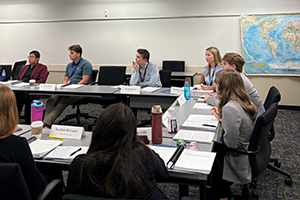
The core feature of the program is a series of discussion-based participant colloquy sessions to delve deeply into primary documents, led by faculty members in small groups of 12 students, with additional plenary lectures. Students will read a range of primary documents in preparation for the seminar colloquy discussions.
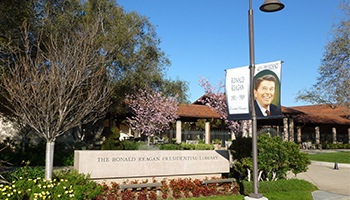
The program includes a midweek excursion to the Reagan Presidential Library Museum and Air Force One in Simi Valley, California.
Program Quick Facts:
Eligibility:
Rising sophomore, junior, and senior undergraduates (Spring 2027 graduates qualify) attending a college or university within the continental United States and Hawaii.
Dates:
June 6-11, 2027
Location:
Pepperdine School of Public Policy, Malibu, California
Funding:
This is a fully-funded program. Participants will receive travel to and from Pepperdine’s Malibu campus, housing, and all meals.
Award:
Certificate awarded upon completion
Application Dates:
Applications Open: November 2, 2026
Early Decision Deadline: January 11, 2027
Application Deadline: February 15, 2027
For questions, please contact roots.seminar@pepperdine.edu.
Faculty Leadership: Abbylin Sellers
 Abbylin H. Sellers is the Edward L. Gaylord Professor of Public Policy at Pepperdine
University in the School of Public Policy. She teaches welfare policy and the core
curriculum courses on great books and foundations of American constitutionalism, which
lay a foundation for effective public policy solutions being guided by moral and ethical
principles.
Abbylin H. Sellers is the Edward L. Gaylord Professor of Public Policy at Pepperdine
University in the School of Public Policy. She teaches welfare policy and the core
curriculum courses on great books and foundations of American constitutionalism, which
lay a foundation for effective public policy solutions being guided by moral and ethical
principles.
Before joining Pepperdine University, she was a professor of American Politics at Azusa Pacific University where she taught courses on the constitutional presidency, Congress and the legislative process, women and the political process, civil discourse in an age of political polarization, and served as a faculty fellow in the Honors College teaching American democracy for the Honors College. Sellers was awarded the university’s highest honor for teaching, the Teaching Excellence award in 2017.
Her research focuses on welfare policy, political behavior, and immigrant entrepreneurship, with her work appearing in Political Psychology; Politics, Groups, and Identities; Presidential Studies Quarterly; and the Journal of Military History. Her co-authored work has been recognized by the American Political Science Association for “Best Paper” for the Representation and Electoral Systems section in 2018. Sellers was awarded as a 2022-2023 Fulbright Scholar to teach American constitutionalism and the constitutional presidency in Japan at Yokohama National University and Hosei University (Tokyo). She annually serves on the summer faculty for the James Madison Foundation’s Summer Institute in Washington, DC.
Sellers earned her B.A. from Westmont College, M.A. in public policy from Regent University, and Ph.D. in political science from Claremont Graduate University.
Frequently Asked Questions
What Students Say About Their Experience
"Despite the many privileges undergraduate study offers, the necessity of grading, evaluation, and competition can undermine open discussion. The Roots of American Order changes that. In the past week, I have had the immense privilege of engaging in thoughtful conversations with students and faculty from around the country with no expectations other than to be present for the moment. It is my hope that everyone can experience something of this nature in their life. Not only am I leaving with a deeper understanding of the founding documents, but also many connections that I cannot wait to see flourish. Such a display of civic engagement and friendship has made me more optimistic about this country’s ability to come together and listen."
Erica Smith, Sophomore
Baylor University, Texas
"I chose to apply to this program for the opportunity to critically analyze American’s Founding Era and to learn how the historical narratives of our past continue to influence the present day. The additional aspect of meeting with students and faculty from various universities and to engage with them about discussion topics was a core part of the program I will always cherish. To grow so much as a scholar and a person in one week exemplifies the dedication by each faculty member, staff, and student involved in designing and participating in a seminar that effectively balanced personal growth and the pursuit of knowledge. I invite any student, no matter what your degree is specialized in, to apply to this program."
Ciara Swenson, Senior
American University, Washington, DC
"Being someone who, until recently, did not come from a background that placed much significance, if any at all, on the “Great Books” and the founding documents, I was truly challenged by this program to think more critically and dive deep into the documents placed before me. This program not only changed my approach but also showed me the importance of a right understanding of the foundational themes and principles of our nation. It is not enough to merely know about the founding; we must know why it happened and what thoughts, ideas, and documents preceded it."
Braden Ashworth, Sophomore
Louisiana State University, Louisiana
"I cannot express how blessed I was by the Roots of American Order Summer Seminar. It was one of the best weeks of my life because I befriended some of the kindest and smartest students around the U.S. Being among like-minded people was encouraging in more ways than one. Networking with my peers and talking about career aspirations gave me a better sense of direction for own my career post grad. I also learned from brilliant faculty who facilitated meaningful colloquy discussions. It was a wonderful experience learning from professors I would not have otherwise met."
Sofia Barba, Senior
Azusa Pacific University, California